Podcast Host:
Lisa Hendrickson-Jack is a certified fertility awareness educator and holistic reproductive health practitioner with over 20 years of experience teaching fertility awareness and menstrual cycle literacy. She is the author (and co-author) of two widely referenced resources in the field of fertility awareness and menstrual health, The Fifth Vital Sign and Real Food for Fertility, and the host of the long-running Fertility Friday Podcast. Lisa’s main focus is her Fertility Awareness Mastery Mentorship (FAMM) Certification — an evidence-based fertility awareness certification program for women’s health professionals.
Podcast: Play in new window | Download | Embed
Subscribe: Apple Podcasts | RSS
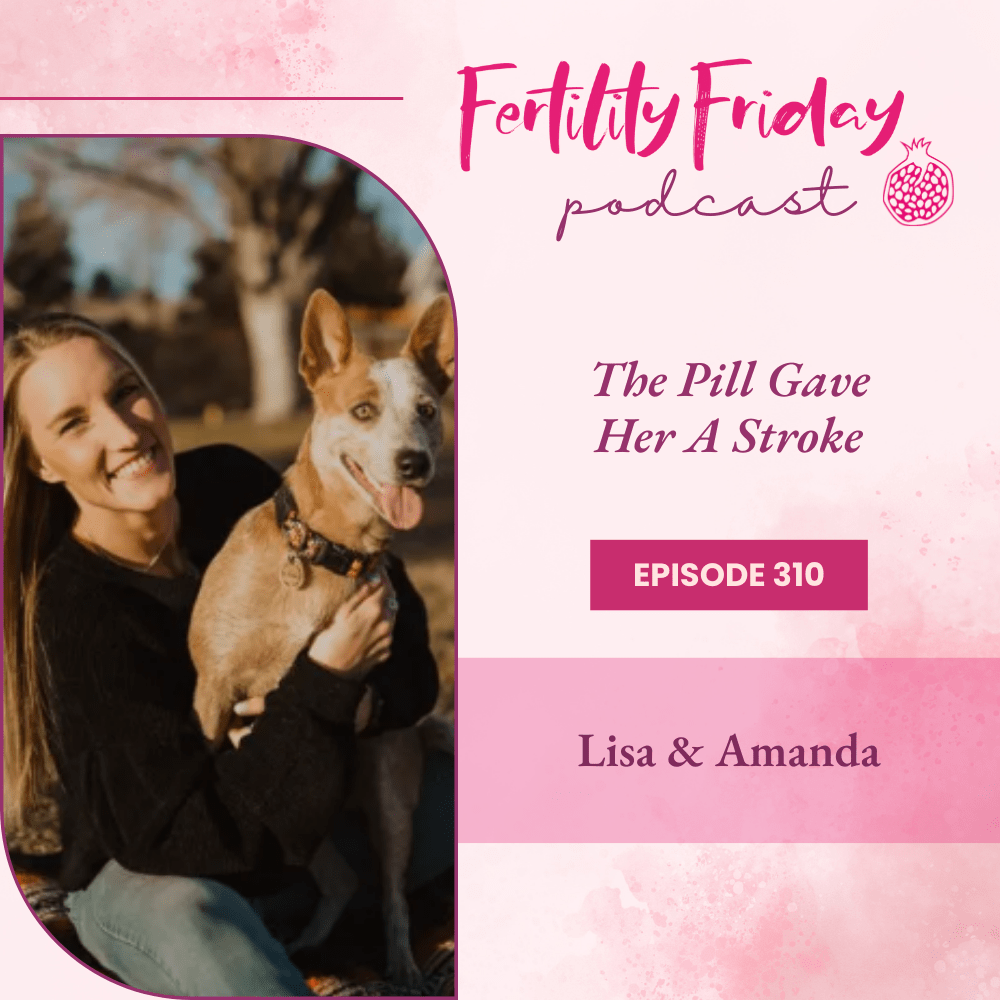
Episode Summary: One Woman’s Stroke After Hormonal Birth Control
In this installment of the Pill Reality Series, Lisa sits down with Amanda, a member of the Fertility Friday community, who shares her experience with hormonal birth control and stroke. Amanda describes her early period history, her years on combined oral contraceptives, and the escalating migraines that preceded a stroke at age nineteen. She walks through the frightening hours leading up to her hospitalization, her recovery on blood thinners, and the medical dismissal she encountered along the way. Amanda also discusses her subsequent experience with a hormonal IUD, the pelvic pain and complications that followed, and her eventual transition to fertility awareness after coming off hormonal birth control altogether. Lisa and Amanda close with a broader conversation about how the medical community can minimize the more serious side effects of hormonal contraceptives, and why understanding birth control stroke risk matters for anyone using or considering hormonal methods. This episode was originally created for a general audience but includes insights relevant for practitioners supporting clients with hormonal birth control side effects and stroke risk.
Listener Takeaways: Recognizing Birth Control Warning Signs
- Persistent or worsening migraines while using estrogen-containing birth control may warrant a conversation with a healthcare provider
- Trusting your own intuition matters, especially when symptoms are dismissed by a medical provider
- IUD insertion and removal can be more uncomfortable for some women than commonly described, and numbing options may be available on request
- Coming off hormonal birth control does not mean cycles regulate overnight, though many women see their cycles normalize within a few months
- Fertility awareness charting can be used successfully to avoid pregnancy without hormonal methods, even for women not actively trying to conceive
Podcast: Play in new window | Download | Embed
Subscribe: Apple Podcasts | RSS
Full Transcript: Episode 310
Lisa: This is the Fertility Friday podcast, episode number 310. Welcome to the Fertility Friday podcast, your source for information about the fertility awareness method and all things fertility. I’m your host, Lisa Hendrickson-Jack. I’m the author of The Fifth Vital Sign and the Fertility Awareness Mastery Charting Journal. I’m a certified fertility awareness educator and holistic reproductive health practitioner with nearly twenty years of experience teaching women to connect to their fifth vital sign through menstrual cycle charting, balancing hormonal health, and optimizing the menstrual cycle without hormones. I’m outspoken about hormonal birth control and its impact on fertility and overall health, because you have the right to know how your body works and how artificial hormones disrupt that natural process. I host live coaching programs to help you achieve optimal fertility and health, because it’s important to have healthy menstrual cycles regardless of whether or not you want to have babies. I’m also a wife and mother of two beautiful boys. I know, I know, I’m a busy girl, but I manage to fit it all in. This podcast is designed to empower you to take full control of your cycles, your fertility, and your overall health, and I’m so excited that you’re here with us today.
Today I’m sharing a very important and informative episode. I’m sharing a new installment of the Pill Reality Series. I’m interviewing Amanda, who is a member of the Fertility Friday community, and she is sharing her experience with hormonal contraceptives. In her case, she experienced one of the most egregious side effects, being an actual stroke that she experienced, and so she shares what that was like, what led up to it, and how she recovered, and subsequently how she is managing her fertility now. So without further ado, let’s jump into today’s conversation with Amanda.
So I’m excited to be here today with Amanda. Amanda and I connected through my Facebook group, I believe, when she was sharing a little bit about her birth control story. It really struck me, so I invited her to come to the show and talk a little bit about it. So Amanda, thank you so much for being here.
Amanda: Yeah, thank you so much for having me.
Lisa: Well, I’d love to start by just going into a little bit of your history, your period history, and then of course getting into your contraceptive history. So would you be able to share with us, if you remember, when you got your first period, what that was kind of like, what your cycles were like, if you’ve used birth control, and how that went, like how old were you when you started, and all of those things?
Amanda: Yeah, of course. So if I remember correctly, I think I started my period when I was about twelve or thirteen years old, and I remember it being very irregular from the start. I had really long periods where I would bleed for sometimes three to four weeks at a time. They weren’t super heavy to start, but as I got into being like fourteen, fifteen years old, they just got ridiculously heavy, and I was miserable. It’s really hard, you know, when you’re fourteen, a freshman in high school, and still trying to navigate all of the awkwardness that comes with being that age, and it was just terrible. For whatever reason, when I was that age, my mom was not a big fan of me using tampons either, so I had to use a pad for everything, and just having to go to school every day wearing a pad, you’re just so awkward and embarrassed, and I’m like, oh, I hope nobody can see it. It was just a really awful time. I remember right around the time I was fifteen, I just had enough, and I started talking to my mom because I had heard some girls around school saying that their doctors had put them on the pill just to help manage period flow and acne and all these other things. My mom was open to it. We went to the doctor, and my doctor thought it was the perfect time to get put on birth control. She was actually going to suggest it had I not brought it up. So then I was prescribed just a generic brand, Blyveniol Estrin, I believe, and that’s kind of where it all began. I was either fifteen or sixteen when I got on birth control.
Lisa: Well, and what was your experience like? I mean, I think a lot of women can relate to that awkwardness.
Amanda: Absolutely. I feel like even as an adult, female periods are so taboo to talk about, and when you’re going through adolescence you don’t really get any support, certainly not from the sexual education courses you take in high school, which are ridiculous — we don’t teach anything about the reproductive cycle. So there’s such a lack of information that women receive from a very early age about their menstrual cycles, and I think that really makes it such an uncomfortable situation to deal with. It’s just really unfortunate that we start this process of our reproductive cycle at such a young age.
Lisa: Well, so you were about fifteen years old, and you were able to address it. So share with us — were you on the pill and still getting a withdrawal bleed, or did you sort it out so that you wouldn’t have to have them as frequently?
Amanda: So when I initially started, I think for about the first year I was just doing the standard packaging, where it was three weeks of the pill and the fourth week of sugar pills, and that worked well. My periods definitely did regulate, my acne did clear up a little bit, but I don’t remember having any other symptoms with it. As I was getting into my late teens, I was always very athletic, playing a lot of sports, and my doctor, when I went in for a checkup, said we could prolong my period even longer if I just skipped the sugar pills on a monthly basis, and could give me a period about four times a year versus every month. I thought that sounded fantastic, so I did that for several years, up until I was probably nineteen or twenty years old. I don’t honestly remember having any adverse effects or breakthrough bleeding — it was all pretty consistent for me.
Lisa: Okay, and so then at some point did you switch to a different type of contraceptive method, or did you stay on that pill having the withdrawal bleed a few times a year?
Amanda: So I was pretty consistent on that pill for about five years. I don’t remember my dose really changing — the only thing that had changed, like I mentioned, was skipping some of the sugar pills on a monthly basis. But what initially happened — I was nineteen going on twenty, I remember it very distinctly — it was a huge moment in my life. I had just finished my fall semester of my sophomore year of college, and we were on winter break around Christmastime, and all of a sudden I started having really severe migraines out of nowhere, which was really unusual for me because I was never a headache person and rarely ever got them. They just came on all of a sudden, and it had gone on for about a week and a half, and finally I got to the point where I thought, this is unusual — it’s happening every single day, consistently, and it’s getting worse, not better.
So I went to the local hospital that was down the street from my parents’ house to get evaluated by a doctor, and I told him I know I’m young, I’m healthy, but I’ve been having really frequent headaches, I have no idea what’s going on, and they’re just getting worse, to the point where it’s like ongoing migraines throughout the day. I started experiencing some really bad vertigo — I was just not well. The doctor I saw completely brushed me off, and he was a jerk, to be honest. He just looked at me and kind of scoffed and said, you’re expecting me to write you a prescription for something? That’s not going to happen. And I said that’s absolutely not why I’m here. It was terrible — he treated me like I was some degenerate young adult coming in looking for a pain pill prescription, so he shrugged me off and sent me home. He said he could give me an IV, the equivalent of extra-strength Tylenol, if that’s something I’d prefer, but otherwise there was nothing he could do, and just sent me home. So I was feeling pretty discouraged, thinking maybe I’m probably just overreacting, it’s in my head.
But two days later I was at work, and my migraine was so severe I couldn’t even look at the computer screen any longer. I felt like I was starting to black out a little bit, my vertigo was just unreal, so I ended up leaving work early. I was going over to my parents’ house for dinner, since it was a Sunday evening, and I went to the local pharmacy before going to my parents’ house to get some migraine medication. Unfortunately, I started having stroke-like symptoms while I was at the pharmacy, and I didn’t realize what was happening at the time.
Lisa: Wow. What were those stroke-like symptoms at the pharmacy, if you can share?
Amanda: So I was at the cashier getting ready to check out and pay for my medication, and I started swiping my hand against the credit card machine, and the guy at the register was looking at me baffled, like, you have to have your credit card in your hand, what are you doing? I was really spacey — I didn’t even realize what I was doing. I grabbed my credit card and paid, but I left my whole wallet on the counter, and as I was walking out to my car the guy had to chase me down in the parking lot to give me my stuff. I did get in my car and drive to my parents’ house — luckily it was only about half a mile down the road — but I hit the curb while driving, and I fell out of my car when I parked in front of their house. My dad was out in the garage doing some maintenance on his car, and he looked at me and said, why are you so frazzled, what’s going on? I said I don’t know, it’s really strange, I’m not feeling well. I tripped up the step going into my parents’ porch, and my mom looked at me, and I just started crying all of a sudden. She said, what is wrong? And I opened my mouth to speak, and all of a sudden the words wouldn’t come out — I was trembling and stuttering, and I started panicking because I knew something was very wrong. My mom could see it in my eyes, and I was able to just muddle out, “hospital, hospital, I need to go to the hospital.” My mom doesn’t handle stress well, so she was instantly freaking out. She called 911, but was worried the ambulance wouldn’t get there in time, so she started driving me to another hospital, because we refused to go back to the one that had dismissed me two days prior. I started going in and out of consciousness in the car, and finally my mom had to pull over because I was blacking out completely, and we had to wait for an emergency vehicle to meet us. I was transported to the hospital by ambulance. When we got to the emergency room I started to come to again — I had a little bit of consciousness, I was able to speak somewhat coherent sentences, but it was very short-lived, and I started going back into blacking out and losing consciousness. They rushed me back to evaluate me immediately, and there was an on-call neurologist who did my initial evaluation. My motor skills were all out of whack — he was asking me who the President of the United States was, and I literally said “Georgina Washington.” I have no idea where that even came from. My mom was standing there mind-blown — I didn’t know my name, I didn’t know what year it was, I was just completely gone mentally. So they rushed me back to do an emergency CT scan to check my brain, and they found a clot at the base of my jugular vein and my sinus, and the doctor diagnosed me with having a stroke.
Lisa: Oh wow. When you were describing that moment with your mom, when you could barely speak — that brought me to tears.
Amanda: It was just — I remember a lot of what happened in bits and pieces. I would just remember the emotions, being in the emergency room, my best friend had come, my mom and dad at the base of my bed — it was just the weirdest feeling. The best way I can describe how I felt was like I was aware of what was going on around me, but for some reason my own identity was foreign to my brain — like I couldn’t reconcile the fact that I was Amanda, I was inside my own body. It was almost like I was watching a TV show. I remember conversing with my friends, but I didn’t know they were talking to me — it was like I was watching the whole thing as an outsider looking in. My mom still says it’s the scariest thing she’s ever been through in her life, and we got a really unclear prognosis from the doctor — they weren’t sure what kind of residual damage my brain could have, and what effects that would have on my cognition and my motor skills. It was all so soon to really understand what impact the stroke was going to have on my life and my body. I still look back at that time now, and it’s just horrifying — there’s so much uncertainty.
Lisa: Well, so you’re nineteen going on twenty —
Amanda: I had just turned twenty — it happened four days after my twentieth birthday.
Lisa: Well, happy birthday. You’re twenty years old, in the middle of your — you said sophomore year of college?
Amanda: Yeah. So I was in the hospital and ICU for seven days, and then they sent me home. This happened during winter break for my college classes, so I was weighing the decision with my parents of whether I wanted to take a semester off, but I’ve always been really determined to get through my education as quickly as possible, and I started feeling better once I was out of the hospital and home. There were still some things I noticed — I had a little bit of a stutter in my speech for probably two weeks after the stroke, but it had gotten better, so I decided to go back to school that semester, about three weeks after my stroke, which in hindsight I probably should have taken a semester off. I was on warfarin, the generic form of Coumadin, a blood thinner, for six months following the stroke. I had to go in every single week, sometimes twice a week, to get my blood thickness checked to make sure they didn’t need to adjust my dosage. I had to change my diet a little bit, since you’re told to stay away from foods containing vitamin K when on blood thinners — no leafy greens, kale, things like that, which I really loved, so it was an adjustment. I was also a pretty avid runner, so I was told to scale that back for a while, since I didn’t want to risk tripping or falling and having severe bruising or internal bleeding, all the side effects that come with being on a blood thinner. It was a really weird time — I felt like I had to put my normal life on pause until I got the clear from doctors that I was able to be off the blood-thinning medication and not have to worry about this happening again. Obviously I got off the birth control immediately. The doctors did a ton of blood tests when I was in the hospital to check if I had some sort of hereditary blood-clotting condition that would have been a red flag, and they found nothing, so we ruled out that it was the hormonal birth control pill that caused the stroke — which was frustrating.
Lisa: That was going to be one of my next questions — so obviously they’re testing, and thinking of course it couldn’t be the pill, she has to have a hereditary condition. So how did that conversation take place — was it the doctor who said you need to come off birth control pills, or were you given some instruction about future pill use?
Amanda: Initially, no. When I was in the hospital and it had happened, all the doctors said you’re done with birth control, we’re getting off of it right now, and once things have settled down you can meet with your OBGYN and discuss what the future will look like in terms of birth control, but for now we’re done with it. After I had been in recovery for about six months, I wasn’t in any steady relationship and wasn’t sexually active, so I didn’t feel the need to even start thinking about getting back on birth control until about a year later. During that time I don’t remember anything out of the normal — I got back into the routine of having a relatively normal cycle. But I did end up talking with my doctor about a year later about being put on the Mirena IUD, because I was in a committed relationship at that time, I was still having some issues with acne, and my periods were getting a little more irregular in my early twenties. My doctor felt that we should stay away from anything that secretes estrogen, but that I would be okay with progesterone, so that’s why she prescribed the Mirena IUD.
Lisa: Interesting. So I want to hang back on a couple of parts of your story, for anyone who’s listened to a few of the Pill Reality Series episodes, especially the ones discussing more serious conditions like stroke and pulmonary embolism — one of the common and recurring themes in these conversations has been the repeated and continual dismissal by medical professionals. In your situation, you were having these migraines every day, continuously, and you said the word continuous, and it was enough that you went to the hospital. This is something so important for all women to hear, and for us to spend a little time here — if you have symptoms that are distressing enough that you take yourself to the hospital, and a doctor is dismissing and ignoring you, we have to band together and share these stories so people can hear that this is very common, even in cases where you have a potentially life-threatening issue. What, if anything, would you want to tell that doctor, or the women listening — this is life-threatening, how many women have been in a situation like that where they’re actually experiencing a life-threatening condition, and they go to the hospital and are basically told it’s in their head, go home?
Amanda: It’s so disheartening. I like to give the benefit of the doubt, and I think there are so many wonderful medical providers and practitioners out there who do genuinely want the best for their patients, and hopefully my situation with that particular doctor was maybe him just having an off day, and I’d like to give people grace, but it was incredibly disheartening and demoralizing to think I wouldn’t even be evaluated, that he treated me like I was flat-out lying to him, looking for a prescription for pain medication. I feel for all the other women who have been in similar situations, because it just sucks — you want to feel empowered, you know your own body better than anyone else, I’ve always prided myself on being very in tune with my body, and it’s very easy for us to pick up when things are not right, and to have a medical provider not believe you and not want to evaluate you — where do you go from there, if that’s supposed to be the authority that’s going to help you and you express that you’re having symptoms?
Lisa: Yeah, it’s tough. And you mentioned you had that moment of, am I overreacting, is it in my head — that’s full-on medical gaslighting in that situation. I think one of the reasons why I’m always talking about charting and getting in tune with your cycles is because the more you start to connect with whatever is happening in your body — connecting with your cycle is kind of like step one, and a lot of women then start to pay attention to other signs too, because it helps them connect overall with their body and start to see certain patterns, and that builds confidence. So if you feel something that’s out of the ordinary, you feel more confident that this is a problem. It breaks my heart to think you could have been on the verge of having a stroke, and the doctor sent you home, and you were left to question if you were overreacting. I hope listeners can take from this conversation that we really have to trust our own intuition, and be the difficult patient if the doctor isn’t taking us seriously. There’s an issue with medical training if you can have a young woman on hormonal birth control having these migraines, and it’s not standard for the doctor to ask if she’s on birth control, since we know severe migraines while taking estrogen-containing birth control can be indicative of an increased risk of something more serious.
Amanda: Yeah, definitely don’t give up — you have to advocate for yourself. In hindsight, had I known the situation was more severe than I could have even conceptualized, I would have pushed for that doctor to give me a CT scan at a minimum, just to evaluate my brain and make sure everything was okay. You have to trust your intuition, and if you truly feel something is wrong, you have to fight for yourself.
Lisa: This is why I always have to go there when it comes to informed consent — not all women who take combined synthetic estrogen-progestin birth control formulations have strokes, we know it’s a relatively small percentage in the grand scheme of things, however we do know the pill does increase the chance of something like this happening, and it affects thousands, if not tens of thousands, of women worldwide. Imagine the alternative universe where your doctor took ten minutes and said, this birth control is really effective at preventing pregnancy, and here are these other non-medical reasons why we use it, but you need to know that if you experience an increasingly severe migraine headache, that could be a sign of something more serious. If you start to feel anxious or depressed, that could be related too. Just having that short five- or ten-minute conversation about the symptoms that can indicate a big problem — usually it’s not something that happens, but you should know, and if you do experience them, come back to me or go to the hospital — I feel like that simple conversation could have changed the trajectory of your experience.
Amanda: Oh yeah, absolutely, I completely agree. Going back to what you said about this maybe not being the most common effect women experience with hormonal birth control — it was kind of ironic, because about six months after I was off the blood-thinning medication, I made a post on my Facebook page, since I’d been sharing my journey with family and friends who were concerned, and finally said I was off the blood thinner and things were great, I was going back to live my life again. A girl I had gone to high school with, an acquaintance, saw my post and reached out through a direct message and said the exact same thing had happened to her two months ago. I was completely shocked, because it doesn’t seem like it’s as common a thing, but someone in my relatively near social circle had experienced the exact same thing months after my stroke, and it was very eye-opening — we were on completely different types of birth control, different doses, and it could happen at any time, and it’s more common than we realize.
Lisa: Well, and some women don’t survive it.
Amanda: Yeah, and then there’s that — how fortunate were the two of us to be having a conversation about it after the fact, and neither of us had any residual negative effects from the stroke, which is very fortunate, but that’s also not the reality for a lot of people. Any sort of stroke where you lose blood flow to major organs, especially your brain, can cause paralysis and speech impediments — a long list of horrible side effects, and it’s just very scary.
Lisa: Well, and it brings up — why continue to interview women who’ve had these types of experiences on birth control? Am I one hundred percent anti-birth-control? It always comes back to this being a medication, and I think a lot of us don’t even think of it as a medication — I remember filling out forms at different doctors’ offices that ask if you’re on any medication, and distinctly remember checking no, because the birth control pill wasn’t medication in my mind, and I’m not alone in that — I’ve had this conversation with so many girlfriends and clients over the years, and this is a very common thing — when you’re taking birth control you often don’t even think of it as a medication.
Amanda: Yeah, totally.
Lisa: But at the end of the day, when you eat a banana you’re not likely to have a stroke or a pulmonary embolism, so it is a medication, it does have these adverse effects, and they know about them — it even surprises me that not everybody knows the pill has a black box warning, and black box warnings are only given to drugs that actually have life-threatening side effects. So I think if anything to take from this episode, it’s that this is real, it does happen to actual people, it’s not so rare that it never happens to anybody, and if I could wave a magic wand and change something about the world, it would be that it’s really helpful for doctors to quickly but thoroughly go through some of those risk factors, so you would know if there was a potential — it might show up differently in different women, but I feel like every woman who takes the pill should be told that if she starts to develop consistent and chronic migraines, that warrants a conversation and re-evaluation of whether she should be taking an estrogen-containing hormonal birth control.
Amanda: Yeah, how did that roll off your tongue so well.
Lisa: So to switch gears a little bit — obviously I can’t let it go — you switched over to a progestin-containing IUD, the Mirena. Is that something you were still using, and how was your experience with that?
Amanda: No, unfortunately I had a negative experience with it too. I joke that I’m always the one percent — whenever you get the warning labels that say only one percent of the population experiences something, I’m always that one percent. I had the Mirena placed when I was twenty-one, and the first three years were pretty uneventful. I did have the standard three- or four-month spotting after placement, which I know is common, but once that went away my period completely stopped, and at the time, not really understanding the importance of having a healthy menstrual cycle, I was just overjoyed not to have a period for three years. I did notice some random cramping throughout the month, when I was supposed to be having a cycle or possibly ovulating — I really didn’t know if I was ovulating or not, I didn’t know how to check at the time. After about three years I started getting a period again, and it was super irregular — I was having a period and then breakthrough bleeding between cycles, and out of nowhere I started getting very severe pelvic pain, to the point where one month it was so bad at work that I went on Dr. Google and tried to diagnose myself. The symptoms I had made me think I was having an ectopic pregnancy, and I was horrified — I was in so much pain it was debilitating, I could barely walk at work, so I had my boyfriend take me to the emergency room. They did a CT scan and an ultrasound and couldn’t find anything, and I was in so much pain it was ridiculous. I had to just wait it out. Things didn’t really get better, so I went back to my gynecologist, and she actually prescribed the mini pill, the progestin-only pill, on top of having my Mirena, because her reasoning was that the Mirena secretes progestin steadily over the span of five years, but maybe the progestin was running a little low, so the mini pill could offset some of my symptoms.
Lisa: Okay, hold on, I’m going to have to chew on that one for a moment. So just to be clear on what you just said — you had the Mirena inserted, and the Mirena is a progestin-releasing IUD that women are often told is localized and stays in the uterus, but we have a circulatory system, so — anyway. So then, in addition to that, you already have an existing hormone-releasing birth control device in your body, and your doctor is now suggesting you have a second prescription for progesterone, the progesterone-only pill, often referred to as the mini pill, so that was the suggestion, to put you on a pill when you already have an IUD inserted?
Amanda: Yes. I know, I would love to see the research for that, if the progesterone-only pill is recommended for women who have an IUD.
Lisa: Sorry, I just had to.
Amanda: I know, I know. So I agreed, and started taking the mini pill, and I did it for about two months, and it made things so much worse — I was miserable, bleeding non-stop, having pretty steady cramping, not debilitating, but very annoying, and I was always just in discomfort. Finally I got to the point where I called her office and told them I wasn’t taking it anymore. I also had a lot of very — after I came off birth control from my stroke I started developing ovarian cysts, which I’d never had before, and my doctor thought maybe I was having frequent ovarian cysts on a monthly basis that could be causing my pain, which was probable. In that same timeframe, my doctor thought I could possibly have endometriosis, because my mom had been diagnosed with it around the same age, so we went through and I had a laparoscopy performed to check, and the doctor found nothing. It wasn’t that big of a deal at the end of the day, but to also have to go through an invasive surgery and still get zero inclination as to what was going on with me was very frustrating, and never once at the time did my doctor say anything about the Mirena being a problem.
Lisa: They did a laparoscopic surgery, and at no point did they say it could possibly be related, and these symptoms could possibly be related to the Mirena — they’d rather do exploratory surgery than even close the question of whether it could be related to the IUD that’s inserted in your uterus, where the pain is emanating from?
Amanda: Yeah, it was never once mentioned, and I kind of berated myself looking back on it now, because it seems so clear to me that that was the cause of what was happening, and I wish I had known, so I didn’t have to go through all of those crazy things, like being put on a mini pill, and then an invasive surgery that didn’t find anything. It was just a very frustrating time — that was from when I was about twenty-four to twenty-five years old, and it was kind of a dark time, I felt like I was in pain all the time, I was in a relationship with my boyfriend and had a very low libido, I was always bleeding, always cramping, moody — it was just terrible, and to not have any answers as to what was going on with me was so demoralizing.
Lisa: That’s just terrible, it sounds like a terrible experience, and one of the things you said, “I wish I had known, and it seems so clear to me now” — it always seems clear after the fact, but at the end of the day, none of the medical professionals in your life were at all concerned about it, so why would you have been?
Amanda: Yeah, I finally decided, after starting to do a little bit of research, that’s actually when I found your podcast and other similar resources. I’d never heard about fertility awareness and managing your reproductive cycle and fertility naturally — that was such a novel concept to me, and I had no idea. I think again it comes from a lack of information — so many women, even in their adult years, don’t realize that if you’re having a regular period, there’s only a very specific window throughout the month in which you’re fertile, and I didn’t even know this. I was convinced in my early twenties that I needed some sort of birth control to make the situation work, because I wasn’t ready to have a child, and once I finally started finding resources such as your podcast, and other books like Taking Charge of Your Fertility, it was so eye-opening to me that I had been going through hell and back for the last five years of my life, believing I needed to be on some sort of hormonal birth control to solve my problems, when in reality I am capable of doing this naturally. At that point I decided I was going to make an appointment to have my IUD removed. I had a little pushback from my doctor, but I explained that I was learning about charting and taking my basal body temperature, and I was going to be very cautious using condoms and other protection in the meantime, until I felt comfortable, and after a little bit of talking about it she agreed, and I made an appointment to get my IUD removed. She couldn’t get it out — the string had fallen off, and for some reason, given the position of the IUD in my uterus, she couldn’t reach it at first, and thought it wasn’t in there. We had to do an ultrasound, and she found it, but I had to go in for two separate appointments — she had to dilate my cervix, it was so uncomfortable and painful, with her kind of digging around in there with her tools, and at the end of that second appointment she looked at me and said, I’m so sorry, but we’re going to have to surgically remove this, because I can’t get it out. That was the cherry on top of my horrible experiences with hormonal birth control. So we scheduled the surgery about a month after that, she had it removed, and everything has been fine ever since, but I just thought, this battle is never going to end, it was so ridiculous.
Lisa: That really sounds like one thing after the other. When we were talking, you mentioned that if there’s a one percent chance of something happening, it happens to you — what’s interesting is we think it’s one percent, but it’s not, it’s a much higher percentage than we think, and having an issue with retrieving the IUD, having to have it removed, or having the strings go missing, is very common, it’s not one percent — I would have to research the actual percentage, but it’s not so uncommon that it’s rare. I’m sorry you had to experience so much challenge around birth control and the IUD. I had another question — one of the common threads that has come out as I continue doing these Pill Reality Series episodes, particularly with respect to the IUD, both hormonal and non-hormonal, is the insertion — you mentioned the removal was obviously a multi-part process and unsuccessful at first — but was the insertion painful, and when they dilated your cervix to remove it, were you given a numbing agent?
Amanda: No, I was not given a numbing agent, I didn’t even know that was something I could ask for. I had taken some ibuprofen beforehand, but there was no numbing agent, she just did the dilation, and it was terrible. The insertion was really painful too — I remember that day distinctly, I was in so much discomfort, I was also dilated by my doctor at that time to have the IUD placed. Everything about it was so uncomfortable. It was quick, not a long, drawn-out process, but the most discomfort was in the first thirty seconds to a minute, and then it went down to a mellow, dull pelvic pain and cramping for the rest of the day, and some spotting. But I would not recommend it, it was a horribly uncomfortable process.
Lisa: It’s interesting what you said, that you didn’t know it was possible for them to administer a numbing agent — after having this conversation with a number of clients, and with the series, what I’ve learned is that it is possible to have a numbing agent, it’s rarely offered, but the one unicorn doctor might offer it, and even if you do want it, you may have to really push for it. Even with a legitimate concern about pain, there’s still this kind of medical gaslighting where it’s just not considered a big deal. I’ve also heard women say the insertion, although very painful in some cases, is quick, so some women experience this intense pain for a short moment in time, and that might be why it’s minimized, but what’s helpful to know is that it is possible for the doctor to administer a numbing agent to the cervix, and it’s also common for it to be a challenge if you want it — you have to push for it. But if you’re thinking about having an IUD placed or removed, it’s within your right to ask for a numbing agent, because not all women experience it as very painful, but it seems as though most women do.
Amanda: Yeah, yeah, I totally agree.
Lisa: Well, wow, you’ve really been through it with this birth control situation. So to bring it to a close — where are you at now? So you had the IUD removed during that whole process. Share with us what you’ve come to currently in how you’re managing your fertility.
Amanda: Yeah, so my IUD was removed about a year and a half ago now, and I expected that, since I’d had some sort of hormonal birth control influencing my cycle for so many years of my reproductive life, it was going to take a long time for my cycle to be normal, and to be honest I didn’t even know what a normal cycle looked like — it was such a new concept for me, and it was kind of exciting and scary to begin that journey, but it was very liberating to just know that I am with my body, nothing is influencing it, and things were just going to get better with time. I’m really happy to report that it only took me about two months to have a quote-unquote normal cycle, and at that time it was more than just my reproductive health I was concerned about — with my doctors telling me I was having ovarian cysts, I didn’t get a definitive diagnosis of PCOS, but I started looking into that a little too, and learned it was related to some insulin resistance and being pre-diabetic. Around that time I really changed my diet a lot, focusing on getting good quality sleep and eating whole, unrefined foods, and my cycle became consistent around the same time as when I had my IUD removed — after two months I had a very consistent twenty-eight-day cycle, and started having my ovulatory fluid right around day nine or day ten, very consistent, which made my charting so much simpler because I wasn’t having to guess. I’m very fortunate, I know a lot of women don’t always have that same experience, and it can take many months up to two years before they have normal cycles, depending on what their metabolic conditions look like. Right now, currently, I’ll say — and I know this may make some women cringe — I’m not as strictly tracking my cycle. I’m still in a committed relationship, but my partner has been very supportive of this whole process. He watched me battle those final stages with my IUD and saw how miserable I was, so we sort of embarked on this new journey together, and he’s been very supportive. I’ve actually had him listen to some of your Fertility Friday podcasts, so he can learn about what fertility awareness really means, and being in tune with your body, and reassuring him too, because I think men often don’t know much about the female reproductive cycle, and he was also under the perception for a long time that I could be fertile at any given point throughout the entire month. Really providing that education for him was hugely helpful, and we’re in a very good place right now. I’ll say I’m not taking my basal body temperature in the mornings really at all anymore, but I am still tracking cervical fluid very consistently, as well as the length of my cycle, so around the times I’m predicting my fertile window we’re very cautious, we’ll use condoms or we’ll abstain. We’ve been doing this for about the last year and a half now, and haven’t had any concerns, and we are actively avoiding pregnancy. We’re still kind of on the fence about whether we want children, but that will be years down the road, and I’m very happy with where my body and my cycles are at now, and I just, years ago, didn’t even know this would be possible.
Lisa: I think for so many women, especially when you’ve only been in an intimate relationship while on hormonal contraceptives, and you’ve never had to navigate those conversations, it can really feel like this is the only way, there’s this idea that not being on hormones means you’re trying to conceive. I’ve had a lot of women have that experience of having an issue with some sort of hormonal birth control method, going to the doctor, saying this isn’t working for me, and basically the thought is if you’re not on it, you’re getting pregnant, it’s just a matter of time. So I think it’s really important to continue to share the experiences of women, because as a listener to the podcast, the majority of women who are listening are adults with very complicated lives, who’ve gone through very complicated programs in school, who have demanding and complicated jobs, lots of responsibilities in life, and it’s ironic to me that so many women doubt their ability to manage their fertility without hormones, so it’s refreshing and important to hear that it is possible to not be on hormones and avoid pregnancy, even when you are absolutely not at all at zero on the conception scale — you don’t want a baby — it is possible to successfully prevent pregnancy without hormones. So thank you for sharing that.
Amanda: Absolutely, because so many women, it’s normal to feel scared and to doubt your ability to do it, but it’s helpful to hear, no, it is actually possible, it is a thing. I know it’s sad too — I have a lot of friends and acquaintances in my social circle who think I’m absolutely nuts for not being on any form of hormonal birth control, and again, it’s like you said, it’s a matter of time, it’s going to happen to you, you may have gotten lucky this month, but it’s going to happen — and it’s sad and almost frustrating that other women don’t have that knowledge and understanding of their own reproductive cycles, to know that if you’re not having a regular menstrual cycle, you can’t be sure you don’t know when you’re ovulating, if you’re even ovulating. There are a lot of precautions you need to take, especially directly coming off of hormonal birth control — my partner and I were so cautious for the first several months, because it was so unpredictable what my body was going to do withdrawing from those hormones, but I feel very confident telling people now, since I’ve been doing this for almost two years, that my cycles are very spot on, I can trust the signals my body is putting out, and I know when I’m ovulating, and it’s refreshing. I try to keep encouraging women — I’m not telling you that you have to get off birth control, if it’s comfortable for you and it works for your lifestyle and you’re not having any adverse symptoms, then go for it, but I will always try to be the one challenging people to really understand our reproductive cycles, and gaining that knowledge — knowledge is power when it comes to your health, and I’m always trying to advocate for people to learn more about their bodies.
Lisa: Well, thank you for sharing that. I really appreciate you taking the time to come on the show and share your experience. This is a really powerful conversation, and like I said, you’ve really been through it with birth control, and I recognize that every woman’s experience is different, but it’s important to know what the possible risks are with any type of contraceptive method, so I do really appreciate you taking the time to share your story.
Amanda: Oh yeah, absolutely, it’s my pleasure, and I love getting to talk to people about my experiences, because like you said, it’s not to say this is going to happen to everyone, and it probably won’t happen to most people, but I think the more we can keep this conversation going, and letting women know that if their current form of birth control isn’t working for them, they have other options — it’s just a very important conversation to have, and I appreciate all the work that you do with this podcast and your Facebook community. When I was navigating this process for the first time, trying to learn about fertility awareness and naturally tracking my cycle, it is very confusing and a little intimidating, but there are so many resources and great communities out there, both in person and online, and I think we’re going to keep moving this conversation forward.
Lisa: Thank you for listening. If you enjoyed today’s show, please share it with a friend. I hope that you enjoyed my interview with Amanda — what a powerful conversation, I definitely had tears in my eyes as she was describing her experience, and really, this is the reason why I do this — it’s so important for us to listen to and hear the experiences women have had. Obviously it’s not the most common experience to have the most egregious side effects of birth control, but it does happen, and there are women who have experienced this, and it’s more common than we think. I was looking at an article, and one of the challenges when talking about the most egregious side effects is that our medical community tends to minimize all of the side effects, including the most egregious ones — minimizing side effects like blood clots, stroke, and pulmonary embolism by saying the risk is so small it almost seems like it doesn’t happen to anybody. But even if there’s a small risk, there’s an estimated one hundred million women around the world who take hormonal birth control, so given a number that large, even a small percentage of women experiencing it is a large number of actual human beings. In one study I was looking at, and quoted from on my Instagram recently, the estimate based on the U.S. population was about three hundred women could die per year — and that’s deaths, not necessarily all of the women who experience these egregious side effects and live to tell the tale. So that’s potentially thousands, if not tens of thousands, of women every year who experience blood clots, stroke, pulmonary embolism, and so on.
So what I want you to take away from this episode is that it is possible — hormonal birth control is actually a drug, and it does have side effects, ranging from depression, anxiety, and low libido, to actual life-threatening side effects, and it does happen, and we should listen to the stories of women it has happened to. The other thing I think we should take from this interview is that because it does happen, women should be adequately counseled about the possible signs and symptoms of these egregious side effects. So although the risk may be small on a statistical level, women actually do experience it, and so for example, if you experience headaches ranging from moderate to severe, or migraines with aura while taking an estrogen-containing birth control, that should at least warrant a conversation with your doctor to determine if an estrogen-containing hormonal birth control method is the most suitable for you — women who experience migraine with aura who take estrogen-containing birth control are at a higher risk of experiencing a stroke or some of these more serious side effects. This theme has run through a lot of these Pill Reality Series episodes, whether we’re talking about depression, anxiety, low libido, recurrent yeast infections, or the risk of an ectopic pregnancy when you have an IUD inserted — either way, these are risk factors we should be aware of, even if the risk is small, and we should be aware of the symptoms, so that if you experience them, you have somewhere to go. I feel like there’s no excuse for not giving women the tools they need so they can seek medical attention in that rare experience of having one of those side effects.
I hope you enjoyed today’s episode, I’d love to hear your comments, and I’ll be talking about this in the Fertility Friday Facebook community as well. Thank you for tuning in to the show today, for supporting the show — I really appreciate all of you for spreading the word. It’s so important for us to have access to this information, whether we use it as a birth control method or not — it is so empowering to learn how our bodies work, and to realize that we have choices beyond hormonal birth control, that we can manage our fertility however suits us best. It’s so empowering to know that we don’t have to do this in just one way. So have a wonderful week or weekend, whenever you’re listening to this episode, and of course, as always, until next time, be well and happy charting.
Peer-Reviewed Research & Resources Mentioned
- Combined Oral Contraceptives: The Risk Of Myocardial Infarction And Ischemic Stroke
- Probable Migraine With Visual Aura And Risk Of Ischemic Stroke: The Stroke Prevention In Young Women Study
- Fertility Friday Pill Reality Series
- The Fifth Vital Sign (free chapter!)
- Real Food for Fertility (free chapter!)
- Fertility Awareness Mastery Mentorship (FAMM)
- How to Interpret Virtually Any Chart — For Practitioners! (complimentary eBook)
Related Fertility Friday Podcast Episodes
- The IUD, The Pill, and Important Side Effects You Should Know About | Pill Reality Series | Katherine & Lisa
- The Pill Gave Her A Stroke | Pill Reality Series | Julia & Lisa
- Are IUDs Safer Than The Pill? | Hormonal IUDs vs Copper IUDs | Dr. Steve Gangemi


Leave a Reply